Are Automatic Car Washes Bad for Your Car's Paint?

November 20, 2026
Drew’s Car Wash Paint Care and Maintenance

Are Automatic Car Washes Bad for Your Car’s Paint?

A well-maintained automatic car wash will not damage your paint. A neglected one can. The difference is not whether the equipment touches your car, it is what that equipment is made of, how often it gets replaced, and whether the dirt is rinsed off before anything makes contact.

That distinction matters because the reputation automatic washes carry was earned honestly, by equipment that has mostly been out of service for twenty years. We have run both soft-touch tunnels and touch-free bays in Bryan and College Station since 2004, and we have replaced our touchless equipment four times in that span. Here is what actually causes the damage people worry about, and how to avoid it anywhere you wash.
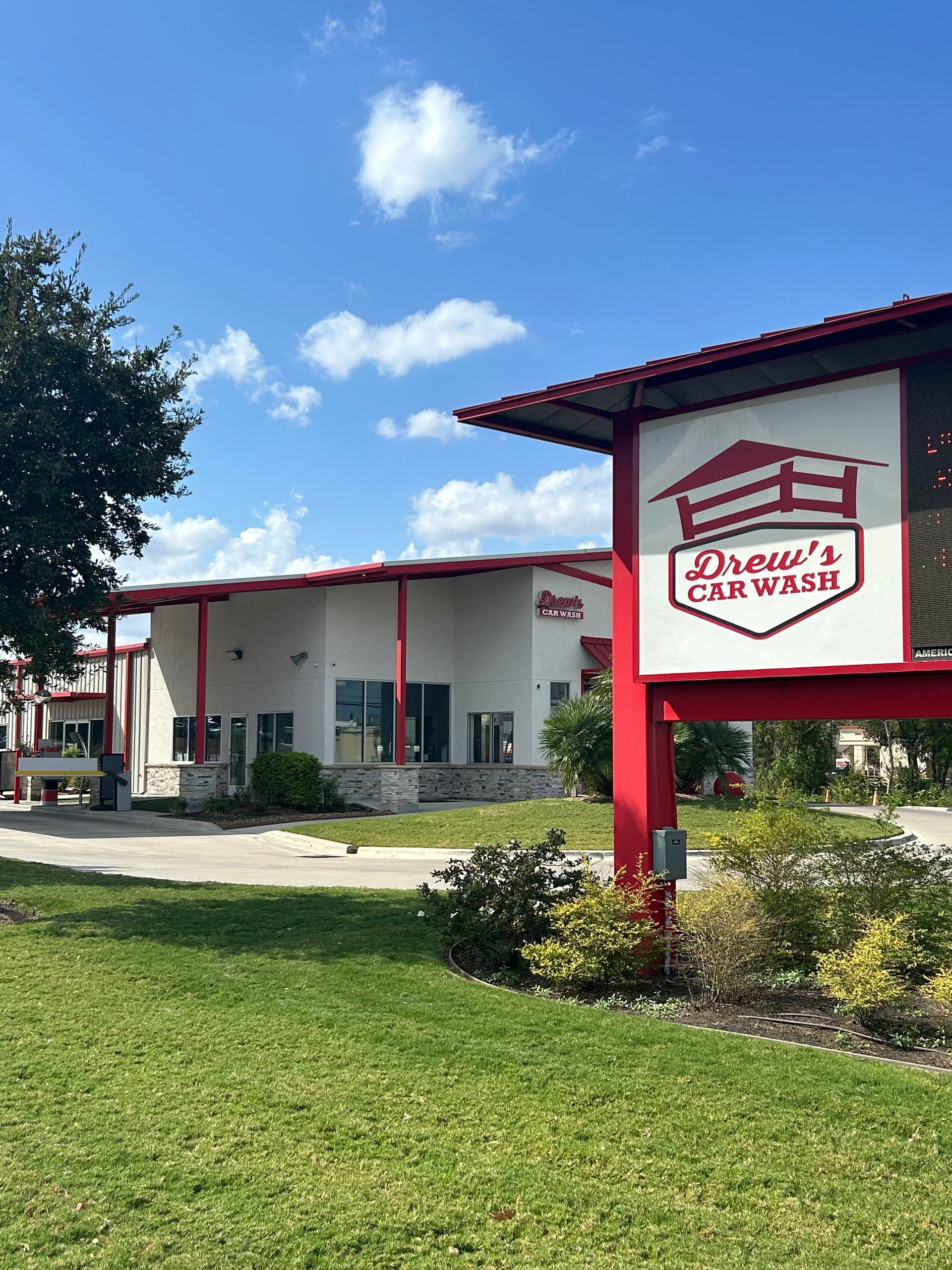
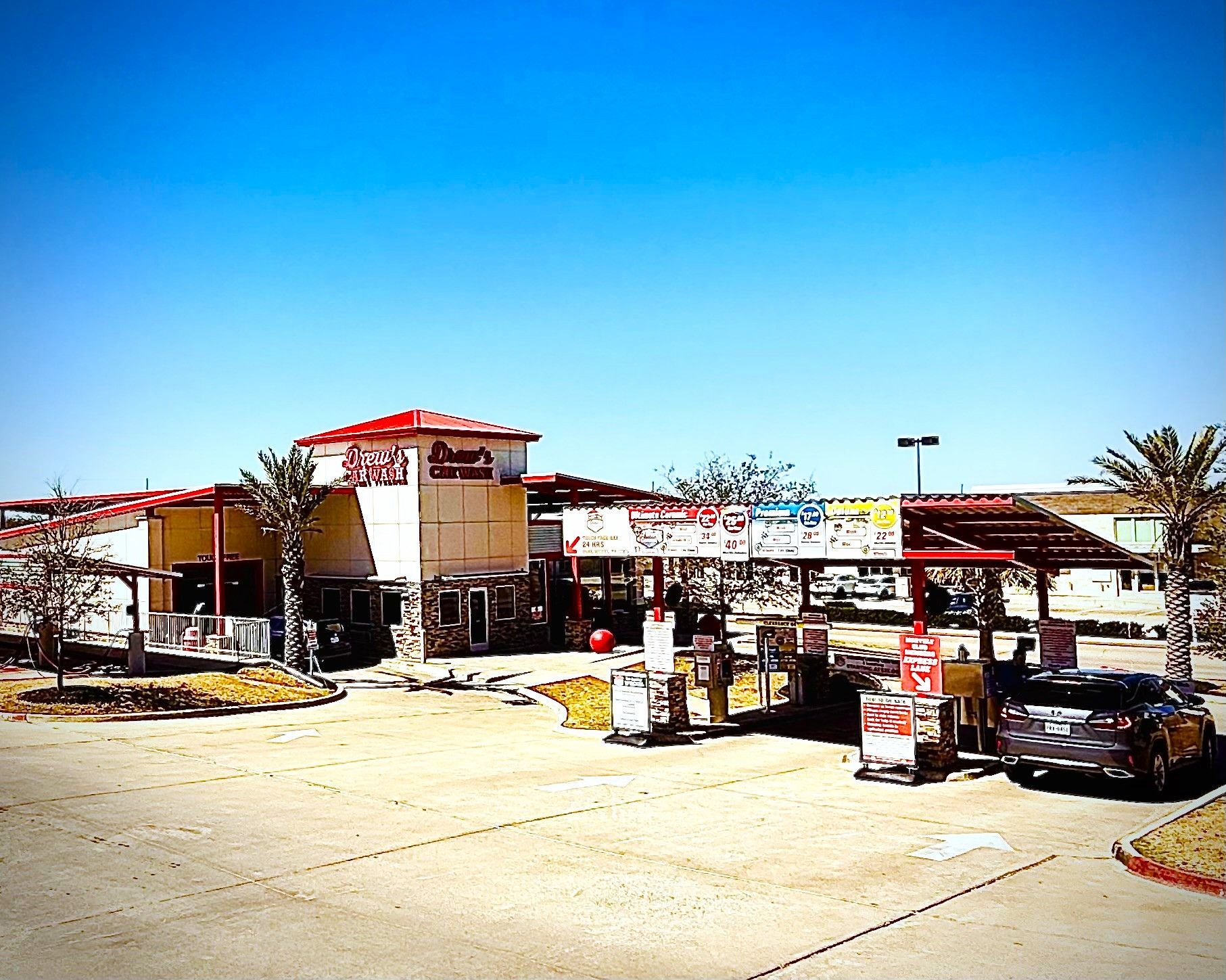
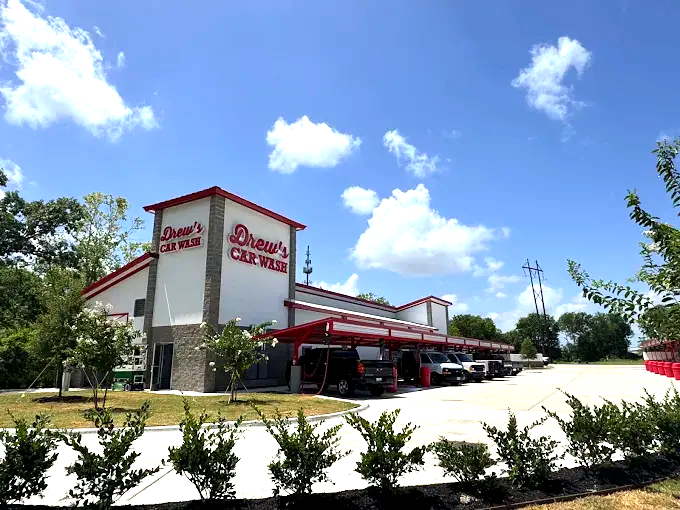
Drew’s Car Wash exterior and sign in Bryan and College Station, Texas.
Drew’s Car Wash has run both soft-touch tunnels and touch-free bays in Bryan and College Station since 2004.

What causes the damage

What Are Swirl Marks, and What Causes Them?

Swirl marks are shallow scratches in the clear coat, the transparent layer sitting on top of your paint color. Individually they are too fine to notice. Collectively they scatter light, which is why they show up as a faint spiderweb or halo pattern in direct sun and why they are far more visible on black, dark grey, and dark blue vehicles than on silver or white.

They have one cause: something abrasive dragged across the surface. In a car wash context, that means one of four things.

  1. Grit carried from the vehicle ahead of you. This is the real mechanism behind most car wash horror stories. If wash material picks up sand or road grit from one vehicle and holds onto it, that grit becomes sandpaper on the next vehicle.

  2. Old-style bristle brushes. Early automatic washes used stiff nylon bristles. Nylon holds debris, does not flex much under pressure, and does not release what it picks up. Those systems deserved their reputation.

  3. Equipment that is not maintained. Wash material wears out. Water filtration fails. A wash that has not replaced its cloth or foam in years is running the same risk as a bristle brush, whatever the material started as.

  4. Insufficient presoak. If the heavy dirt is still on the vehicle when the equipment reaches it, friction has to do work that chemistry should have already done.

Notice what is not on that list: contact itself. Contact is not the problem. Contact plus trapped grit is the problem.

Material and sequence

How Is Soft-Touch Different From the Old Brushes?

Modern soft-touch systems use closed-cell foam or soft cloth instead of nylon bristles. Two things change as a result.

  • The material flexes.

    Instead of a stiff bristle dragging across a panel, foam conforms to the surface and glides. Less pressure at any single point means less chance of anything scoring the clear coat.

  • More importantly, it sheds.

    Closed-cell foam does not have the open structure that lets nylon trap sand inside it, and continuous water flow through the equipment flushes debris out rather than storing it for the next vehicle.

The sequence matters as much as the material. In a properly run tunnel:

  1. Presoak

    A presoak goes on first and sits long enough to break the bond between dirt and paint.

  2. High-pressure rinse

    Then high-pressure water removes the loose material.

  3. Contact

    By the time anything makes contact, the abrasive layer is already gone.

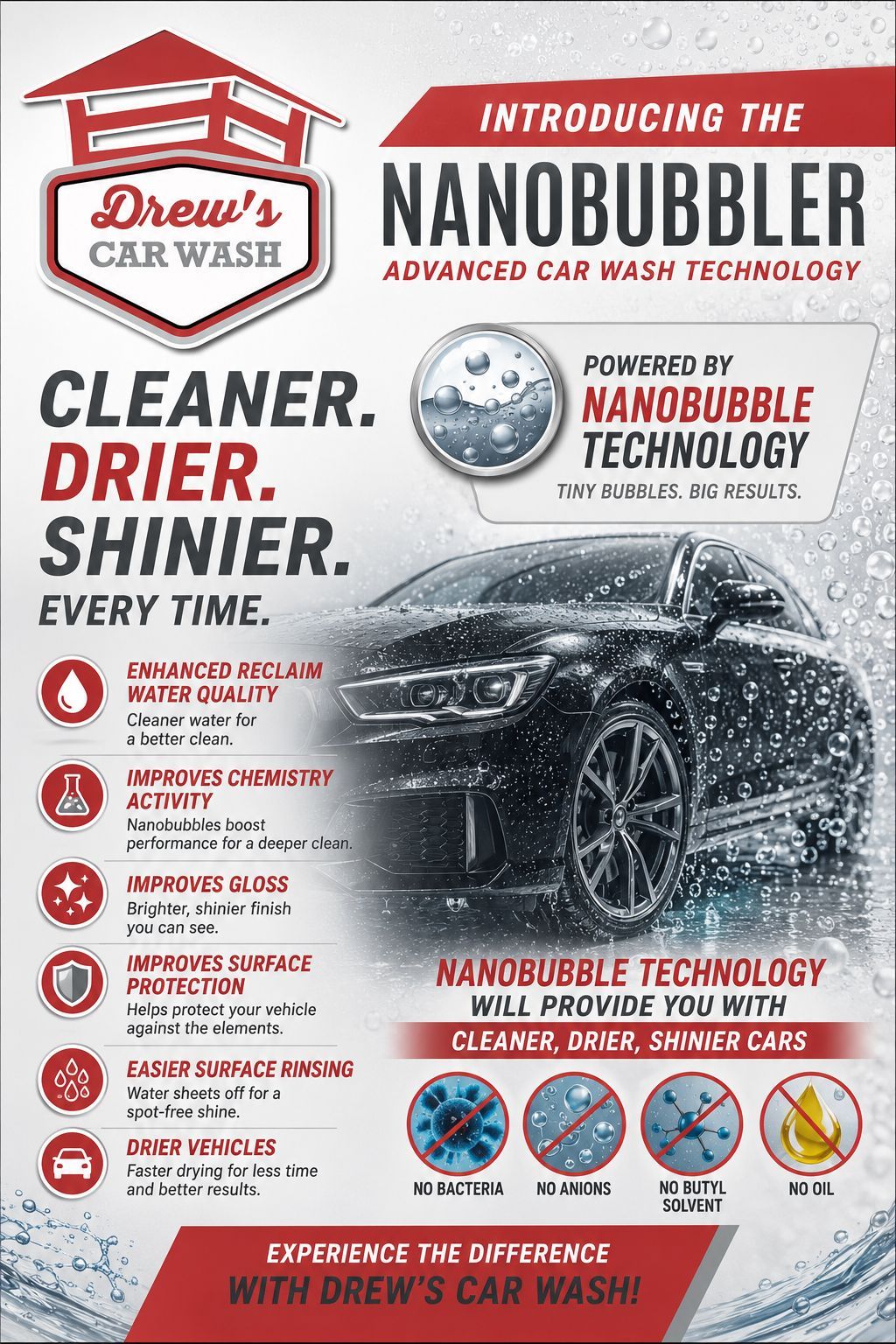
Our tunnels also use nanobubble technology, which injects extremely small gas bubbles into the wash water so cleaning solution reaches into surface texture that larger water droplets pass over.

Drew’s Car Wash nanobubble technology graphic: cleaner, drier, shinier cars every time.
Nanobubbles inject extremely small gas bubbles into the wash water, so cleaning solution reaches into surface texture that larger water droplets pass over.

Contact versus chemistry

Is a Touchless Car Wash Safer for Paint?

For the specific risk of contact scratching, yes. Nothing physically touches the vehicle in a touch-free bay, so there is no mechanism for contact-induced swirl marks. That is not marketing, it is just how it works.

There is a tradeoff, and anyone who does not mention it is selling you something. Touch-free washing relies entirely on cleaning chemistry and high-pressure water doing the work that friction would otherwise do. That means stronger detergent and more dwell time.

  • On a lightly soiled car

    It is excellent.

  • On a vehicle carrying weeks of baked-on road film or dried mud

    A single touch-free pass may leave a faint film behind that a soft-touch pass would have removed.

So “safer” depends on what you are protecting against. If you are protecting a finish where any contact is unacceptable, touch-free is the answer. If you are trying to get heavy buildup off, a maintained soft-touch tunnel does it in one pass.

Where the touchless bays are

Our touchless bays are at two College Station sites, at 720 Earl Rudder Fwy beside the University Drive location, and at Tower Point on the Highway 6 frontage road. Both are open 24 hours with a daily equipment reset between 3:30 and 5:00 a.m.

Vehicle and finish fit

Which Vehicles and Finishes Should Use Touch-Free?

Some finishes have a real reason to avoid contact, and some vehicles have no choice.

  • Vinyl wraps

    Edges and seams are the vulnerable part. Contact equipment can catch a lifting edge.

  • Ceramic coatings

    The coating is doing the protecting, and keeping it uniform matters. Touch-free preserves it longer.

  • Matte and satin paint

    The finish depends on an even micro-texture. Anything that polishes it unevenly creates shiny patches, and those cannot be corrected the way gloss can.

  • Single-stage and older paint

    Vehicles painted before clear coat became standard have color sitting directly on the surface with no sacrificial layer above it.

  • Dark paint on a car you look at closely

    Swirls are not more common on black paint, they are more visible. If that bothers you, remove the variable.

Vehicles that do not fit a tunnel.

Our express tunnels clear 96 inches and limit tire width to 12.5 inches, which rules out dually trucks, many lifted trucks, and anything carrying a roof rack or roof-mounted light bar. The touchless bays clear 90 inches with no tire width limit, so for those vehicles it is not a preference, it is the only option.

Bay clearances at Drew’s Car Wash
Bay type Clearance Tire width limit
Touchless bays 90 inches No tire width limit
Express tunnels 96 inches 12.5 inches
  • Rules out:
  • Dually trucks
  • Many lifted trucks
  • Roof racks
  • Roof-mounted light bars

The real risk

What Is Actually Riskier Than an Automatic Car Wash?

Washing at home, for most people.

The classic driveway setup causes more swirl marks than any maintained commercial wash: one bucket, so every pass reloads the sponge with the grit you just removed; a sponge dropped on the driveway and picked up again; dish soap, which strips wax along with dirt; drying with a bath towel; and washing in direct Texas sun, where water spots bake on before you reach them.

  • One bucket
  • Sponge dropped on the driveway
  • Dish soap
  • Bath towel
  • Direct Texas sun

This is worth saying plainly because automatic washes absorb blame they often have not earned. Swirl marks accumulate slowly over years and only become visible once there are enough of them. People notice them after a trip through a tunnel and assign the cause to the most recent event, when most of the damage was already there.

Doing it right at home is entirely possible. It takes:

  • Two buckets with grit guards
  • A proper wash mitt
  • pH-neutral soap
  • A clean microfiber drying towel
  • Shade

Most people do not do all five.

Brazos County conditions

What Do Bryan and College Station Conditions Do to Paint?

Brazos County puts four specific things on a vehicle, and all four are harder on a clear coat than any wash is.

  • Oak pollen

    It blankets the Brazos Valley every spring. Pollen is mildly acidic, and once it gets damp it bonds to clear coat rather than rinsing off. A yellow film left through a few humid March days is no longer sitting on the paint, it is stuck to it.

  • Road brine

    TxDOT’s Bryan District pre-treats Brazos County roads with brine ahead of freezing weather. Brine is corrosive, it collects in wheel wells, rocker panels, and the undercarriage, and those are precisely the areas nobody rinses by hand.

  • Summer heat

    At 100 degrees and above, bird droppings and bug residue stop being a cosmetic problem. Both are acidic, and heat accelerates the reaction, so what would take weeks to etch paint in a mild climate can do it here in days.

  • Traffic grit

    The Highway 6, Highway 21, and FM 2154 corridors keep a constant film of road dust and construction grit on anything driving them daily. That film is abrasive, which matters if you then wipe the car down dry.

Every one of those does more measurable harm sitting on a vehicle for a month than three minutes in a maintained tunnel.

How often

How Often Is Too Often to Wash Your Car?

Frequency is not the risk. Leaving contaminants on the paint is.

Given what the previous section describes, washing weekly in this climate is not a hazard to your paint, it is the thing protecting it. The drivers who end up with etched clear coat here are almost never the ones washing too often. They are the ones who let pollen or brine sit for a season.

Judging the wash

How Do You Tell a Good Automatic Wash From a Bad One?

You can judge most of it from the entrance.

  1. Look at the wash material. Foam or cloth that is grey, matted, or shredded has been in service too long.

  2. Look at whether a presoak is actually being applied, and whether vehicles ahead of you are getting a high-pressure rinse before anything touches them.

  3. Look at the site itself, because a facility that keeps its lot, vacuums, and signage in good order is generally maintaining the equipment you cannot see.

Then do your part.

  • Remove bike racks, roof-mounted light bars, and aftermarket spiky lug nuts before entering a tunnel.
  • Fold in mirrors if they are manual.
  • If your vehicle is caked in dried mud, say so, or use a touch-free bay instead.

The operator’s answer

What We Do About It

Our seven locations in Bryan and College Station run soft-touch foam, not bristle brushes, with presoak and high-pressure rinse ahead of any contact, and nanobubble technology in the wash water. Water reclamation systems filter and recycle, and we use biodegradable products.

  • Soft-touch foam, not bristle brushes
  • Presoak and high-pressure rinse
  • Nanobubble technology
  • Water reclamation systems
  • Biodegradable products

For finishes and vehicles that should not be touched at all, the touchless bays at University Drive and Tower Point are open 24 hours, and an Unlimited Wash Club membership covers both formats at no extra charge. Our Ultimate and Ultimate Wash Plus packages add a two-step ceramic and graphene application, which puts a sacrificial layer above your clear coat so that future contact, from a wash or anything else, meets the coating first.

Twenty-two years of running both formats is the short version of why we answer this question the way we do. Contact is not the enemy. Neglected equipment is.

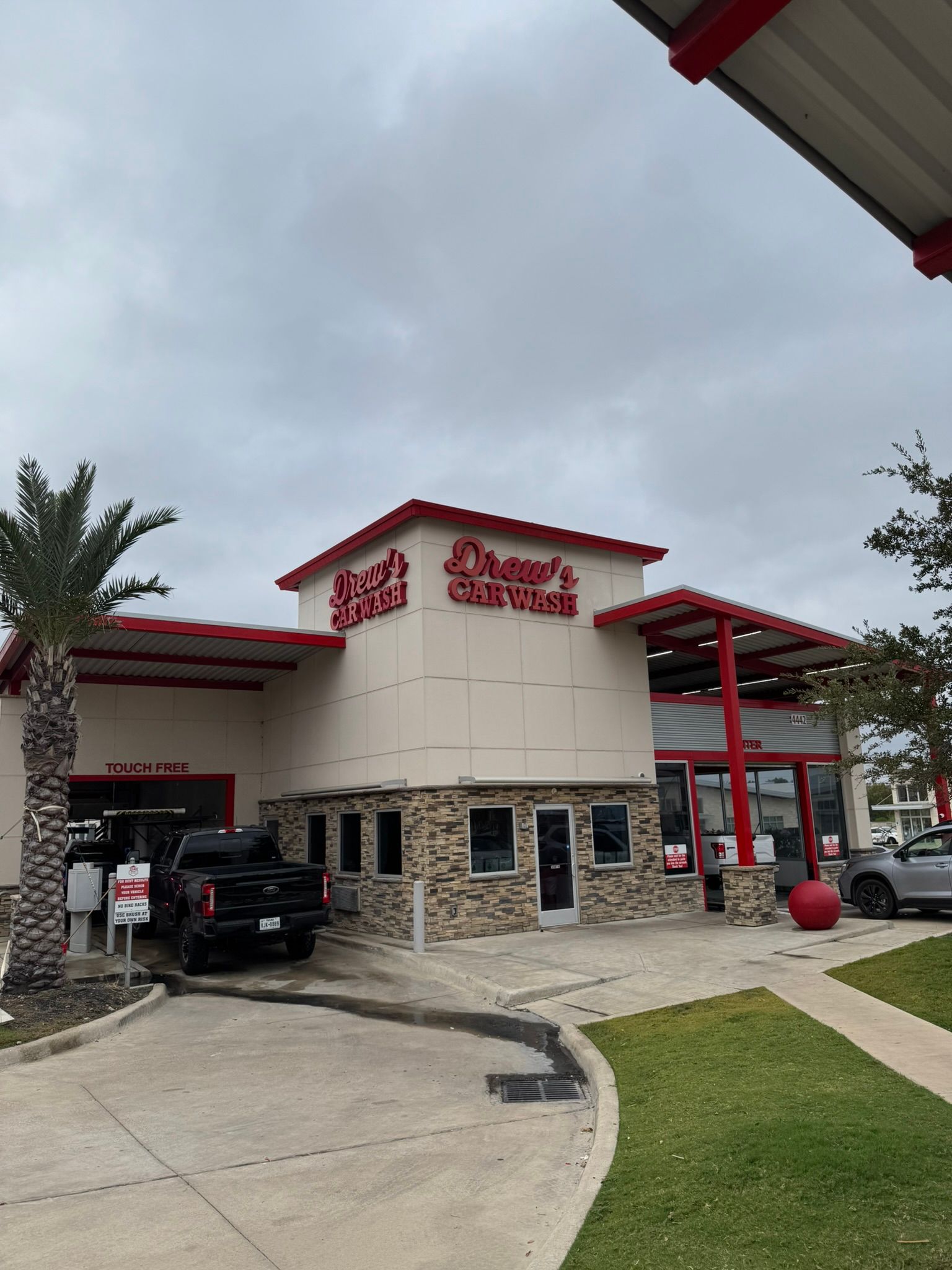
Drew’s Car Wash at the Tower Point site on State Highway 6 South in College Station, Texas, one of the two sites with 24-hour touchless bays.
Tower Point, on the Highway 6 frontage road, is one of the two College Station sites where the touchless bays are open 24 hours.
November 2, 2026
Car wash tips, paint care advice and company news from Drew's Car Wash, serving Bryan and College Station, Texas with seven locations since 2004.
By Drew's Car Wash • October 16, 2026
Drew's Car Wash is replacing the equipment in its 24-hour touchless wash bays in College Station this fall, with new Petit machines at two locations.